
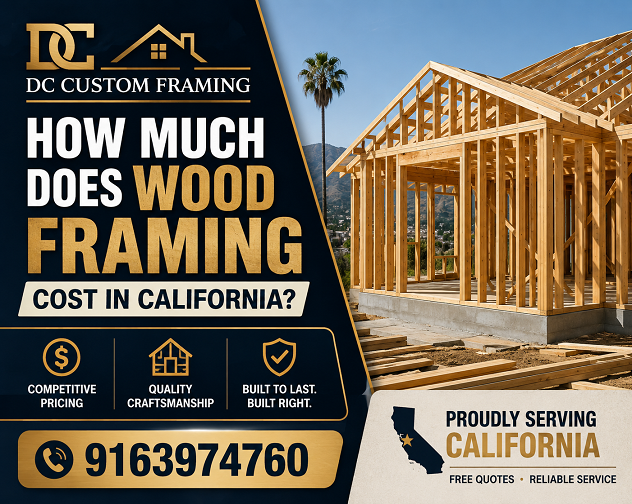
Wood framing costs in California generally range from $12 to $35 per square foot. Most homeowners spend between $24,000 and $70,000 to frame a standard 2,000-square-foot home. Final pricing depends on labor rates, lumber prices, structural engineering requirements, building code compliance, and the overall complexity of the home design.
California remains one of the most expensive states for residential construction. While the state offers strong housing demand and long-term property value appreciation, builders must account for elevated labor costs, strict seismic regulations, wildfire-related construction requirements, and regional material pricing fluctuations.
What Is Included in Wood Framing Costs?
Many property owners assume framing refers only to installing wall studs. In reality, a complete wood framing package includes numerous structural components that form the skeleton of a building.
Materials Typically Included
A standard framing project generally includes:
- Wood studs
- Top plates
- Bottom plates
- Floor joists
- Ceiling joists
- Roof rafters
- Roof trusses
- Structural headers
- LVL beams
- Engineered lumber
- Exterior sheathing
- Structural connectors
- Nailing systems
- Blocking and bracing
These materials work together to transfer structural loads from the roof to the foundation while maintaining compliance with the California Residential Code.
Labor Included
Professional framing crews typically perform:
- Site layout
- Structural measurements
- Wall assembly
- Floor system installation
- Roof framing
- Structural bracing installation
- Framing corrections
- Inspection preparation
Labor frequently represents 40% to 60% of total framing costs in California.
How Much Does Wood Framing Cost Per Square Foot?
The most common method used by contractors is calculating framing expenses using cost per square foot.
| Construction Type | Average Cost Per Sq Ft |
| Production Home | $12-$18 |
| Standard Residential Home | $18-$25 |
| Custom Home | $25-$35 |
| Luxury Home | $35-$50+ |
The complexity of the structure significantly impacts the final number.
A simple rectangular home with a straightforward roof system requires fewer labor hours than a custom residence featuring vaulted ceilings, multiple rooflines, large window openings, and complex structural spans.
Wood Framing Cost by Home Size
1,000-Square-Foot Home
Smaller homes often experience slightly higher per-square-foot costs because many fixed construction expenses remain unchanged regardless of project size.
| Home Size | Estimated Framing Cost |
| 1,000 Sq Ft | $12,000-$35,000 |
1,500-Square-Foot Home
Many starter homes and compact custom residences fall within this range.
| Home Size | Estimated Framing Cost |
| 1,500 Sq Ft | $18,000-$52,500 |
2,000-Square-Foot Home
This remains one of the most common home sizes throughout California.
| Home Size | Estimated Framing Cost |
| 2,000 Sq Ft | $24,000-$70,000 |
2,500-Square-Foot Home
Larger homes generally require additional structural supports and engineering review.
| Home Size | Estimated Framing Cost |
| 2,500 Sq Ft | $30,000-$87,500 |
What Factors That Affect Wood Framing Costs in California
Lumber Prices
The largest material expense is often framing lumber.
Several market variables affect lumber pricing:
- Global lumber demand
- Housing starts
- Supply chain disruptions
- Transportation costs
- Import tariffs
- Seasonal shortages
Builders commonly use:
- Douglas Fir lumber
- Hem-Fir lumber
- SPF lumber
- Engineered wood products
- Laminated Veneer Lumber
- Glulam beams
Price spikes in these products can substantially increase framing budgets.
Labor Costs
California has some of the highest construction labor rates in North America.
Factors influencing labor pricing include:
- Union wages
- Carpenter availability
- Local labor shortages
- Project location
- Construction demand
In major metropolitan areas, framing labor cost can exceed material expenses.
Architectural Complexity
Complex home designs require more labor and additional structural materials.
High-cost features include:
- Multi-story construction
- Open-concept floor plans
- Cathedral ceilings
- Vaulted ceilings
- Dormers
- Cantilevers
- Large glass openings
- Custom roof systems
Every additional design feature creates more cutting, fitting, and structural reinforcement requirements.
How California Building Codes Affect Framing Costs
Unlike many states, California imposes strict construction regulations due to seismic activity and wildfire concerns.
Seismic Design Requirements
California’s earthquake standards often require:
- Shear walls
- Structural hold-downs
- Lateral bracing
- Anchor bolt systems
- Engineered framing plans
- Load path reinforcement
These requirements increase both labor and material costs.
Wildland Urban Interface Requirements
Properties located in designated wildfire-prone areas may face additional construction requirements.
Common upgrades include:
- Fire-resistant assemblies
- Enhanced exterior protection
- Additional structural detailing
- Specialized sheathing systems
Compliance with these regulations can increase overall framing expenses.
Regional Wood Framing Costs Across California
Bay Area
The San Francisco Bay Area consistently ranks among the most expensive construction markets in the country.
Factors include:
- High labor costs
- Skilled labor shortages
- Elevated permit expenses
- Competitive contractor demand
Los Angeles
The Los Angeles construction market experiences strong year-round demand, often resulting in elevated framing bids.
San Diego
Coastal regulations and labor rates can increase project costs throughout San Diego County.
Sacramento
The Sacramento region typically offers lower labor costs compared to California’s coastal markets while maintaining similar building code requirements.
Wood Framing vs Steel Framing
Many homeowners compare wood framing with steel framing during the planning phase.
| Feature | Wood Framing | Steel Framing |
| Initial Cost | Lower | Higher |
| Labor Cost | Lower | Higher |
| Availability | Excellent | Moderate |
| Structural Flexibility | Excellent | Good |
| Thermal Performance | Better | Lower |
| Pest Resistance | Moderate | Excellent |
For most residential projects, wood remains the more economical option.
Conclusion
The cost of wood framing in California depends on a combination of material pricing, labor availability, building code requirements, engineering specifications, and architectural complexity. While average costs generally range from $12 to $35 per square foot, every project presents unique structural and regulatory considerations.
Homeowners planning a new build should obtain multiple estimates, review local code requirements, evaluate regional labor markets, and consult qualified professionals before finalizing a construction budget. Taking these steps early can help avoid surprises and create a more accurate understanding of the total framing investment required for a successful California construction project.
Frequently Asked Questions
Most homeowners spend between $24,000 and $70,000, depending on labor rates, structural complexity, and regional construction costs.
Labor commonly ranges from $5 to $15 per square foot, although premium markets may exceed these averages.
Yes. Requirements for shear walls, structural connectors, and engineered framing systems often increase project costs.
For most residential construction projects, wood framing remains less expensive due to lower material and installation costs.
Builders frequently use Douglas Fir lumber, Hem-Fir lumber, SPF lumber, LVL beams, and other engineered wood products.