Wall Framing Contractor in Cameron Park, CA
Load-bearing walls, shear walls, partition walls, and code-compliant exterior assemblies for new construction, additions, and ADUs throughout El Dorado County.
What Is Wall Framing
Why Does Getting It Right Matter More Than Any Other Trade
Wall Framing Services We Provide in Cameron Park
Exterior Load-Bearing Walls
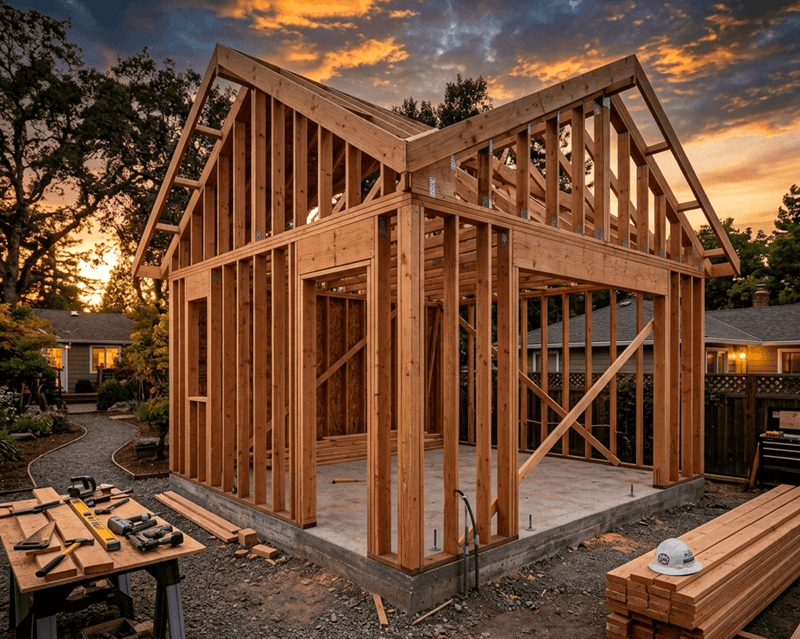
Exterior bearing walls carry gravity loads from the roof and upper floors while simultaneously enclosing the building from the weather. We frame exterior bearing walls with studs sized for the height and load conditions specified in the structural plans, doubled top plates for load distribution, and code-compliant headers at every window and door opening. For Cameron Park projects in WUI fire hazard zones, we build the exterior wall assembly to meet California's ignition-resistant construction requirements including the sheathing, weather-resistive barrier, and material transition details at the foundation-to-wall connection that prevent ember intrusion and direct flame contact.
Interior Load-Bearing Walls
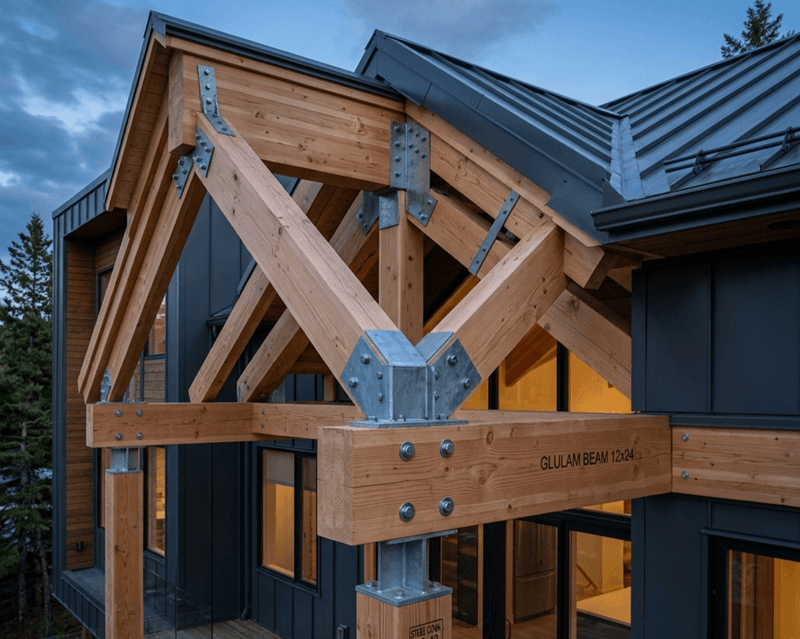
Interior bearing walls carry floor and roof loads from above down to the foundation but they are often invisible to the homeowner because they are buried behind drywall and look identical to non-bearing partition walls. Correctly identifying which interior walls are bearing and framing them with the right stud sizing, header specifications, and connection hardware is one of the most critical tasks in residential framing. We frame interior bearing walls per the structural engineer's framing plan, with properly sized headers at every opening and Simpson Strong-Tie hardware at every required connection point. When a project involves removing or modifying an existing interior bearing wall, we coordinate the structural engineering for the replacement beam, shore the loads above during construction, and install the new header and post assembly to the approved structural drawings.
Partition Walls (Non-Bearing)
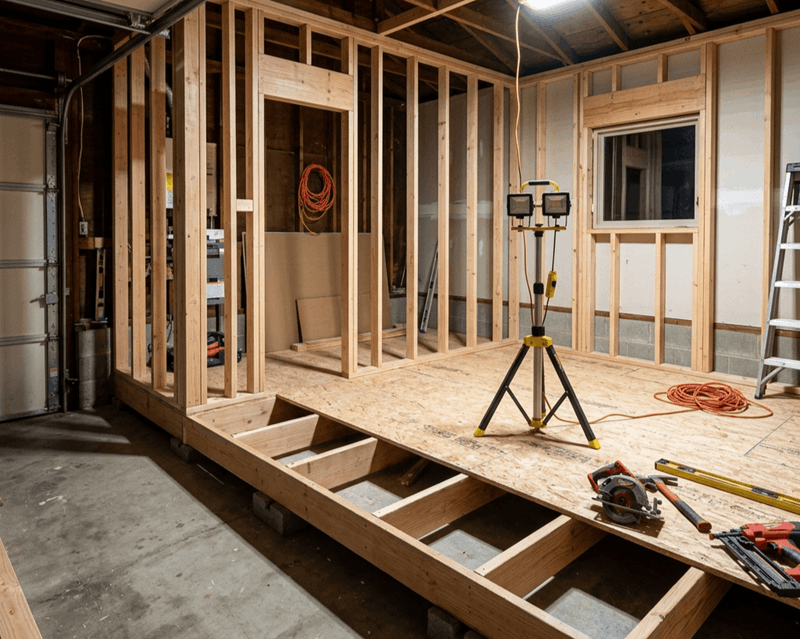
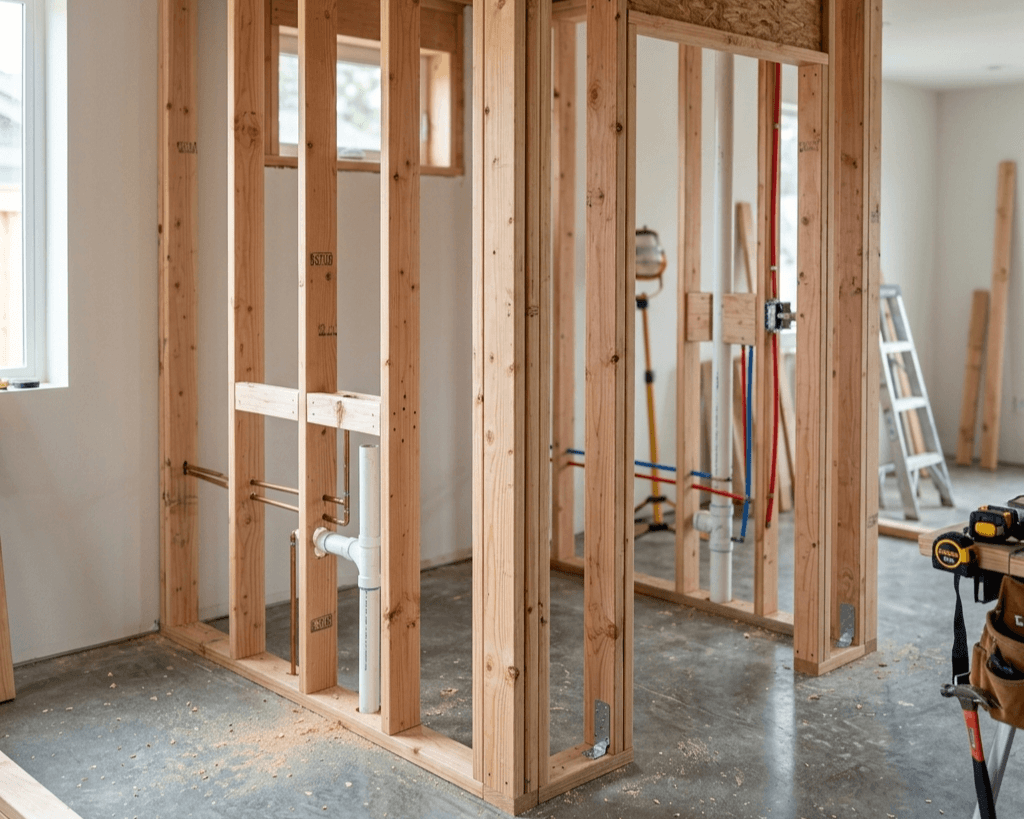
Partition walls divide interior space into rooms without carrying any structural load from above. While partition walls are not structural in the gravity-load sense, they must still be framed correctly plumb, square, and at the correct height to receive drywall cleanly and to accommodate doors, windows, and mechanical penetrations without creating problems for the finish trades. We frame partitions at the stud spacing specified in the plans (typically 16 or 24 inches on center), with proper backing for fixtures, blocking for cabinetry, and fire blocking at floor and ceiling intersections where required by the California Building Code.
Shear Walls (Seismic Lateral Resistance)
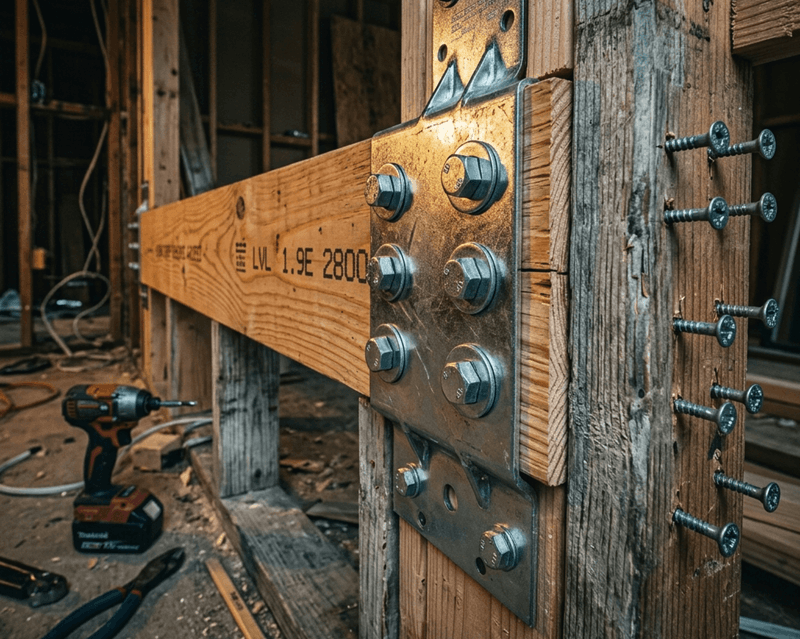
Shear walls resist the lateral forces that earthquakes and high winds impose on a building. In Cameron Park which falls within California's Seismic Design Category D the structural engineer's shear wall schedule specifies which walls must be sheathed with structural panels, at what nailing pattern, with what edge distance, and with what hold-down and anchor bolt hardware at each end. A shear wall that is sheathed but nailed at the wrong spacing does not perform to its engineered capacity. A shear wall that is missing its hold-down hardware at the bottom will uplift during a seismic event rather than transferring the lateral force to the foundation. We install every shear wall per the engineer's schedule, correct sheathing, correct nailing, correct hardware, correct anchor bolt embedment and document the installation for the framing inspector.
Tall Walls and Cripple Walls on Sloped Lots
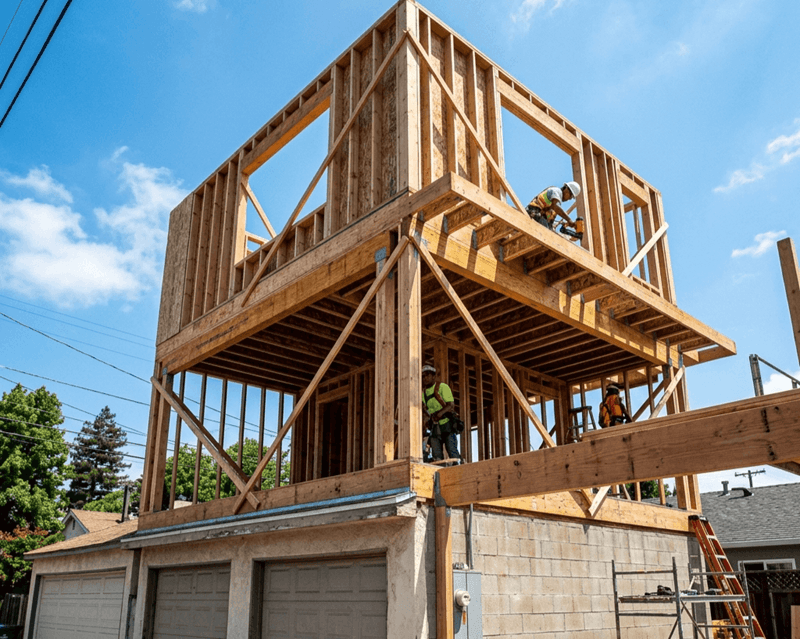
Cameron Park's foothill terrain frequently produces wall conditions that exceed the standard eight-foot stud height. The downhill side of a home on a sloped lot may require twelve-foot, fourteen-foot, or taller exterior walls and these tall walls require larger studs, closer stud spacing, intermediate bracing, and different sheathing details than standard-height walls. Cripple walls, the short stud walls between the foundation and the first-floor platform are historically the weakest link in older California homes during seismic events. We frame new cripple walls with code-compliant bracing and shear sheathing, and we retrofit existing cripple walls in older Cameron Park homes to current seismic standards when required.
Wall Framing Corrections on Active Projects
When an ongoing construction project reveals wall framing errors missing or undersized headers, incorrect king and jack stud assemblies at openings, shear walls nailed at non-compliant spacing, missing hold-down hardware, or walls framed out of plumb beyond code tolerance we correct the defects to the structural plans and California code before the project continues. We provide written documentation and photographs of every correction for the permit record.
Why Cameron Park Homeowners Choose DC Custom for Wall Framing
We Frame Every Wall for Its Actual Structural Role
01
Shear Wall Installation That Passes Inspection the First Time
02
WUI Exterior Wall Assembly Experience
03
Tall Wall and Sloped Lot Framing Expertise
04
No Subcontracted Wall Framing Crews
05
Our Process
How Our Cameron Park Wall Framing Projects Work
01
Structural Plan Review and Shear Wall Schedule Analysis
Before pricing a wall framing project, we review the architectural and structural plans completely. We identify every bearing wall, every shear wall, every header size and location, every hold-down and anchor bolt specification, and every WUI assembly detail. We cross-reference the structural engineer's shear wall schedule against the architectural floor plan to confirm that every designated shear wall can be framed at the specified location without conflict from windows, doors, or mechanical penetrations.
02
Permit Application with El Dorado County
We prepare and submit the building permit application to El Dorado County Building Services with the required plan set, structural calculations, and energy compliance documentation. For projects with engineered shear wall schedules, we include the structural engineer's hold-down and anchor bolt specifications with the permit submission. We track plan check status and respond to corrections before scheduling on-site work.
03
Foundation and Floor Platform Verification
Before wall framing begins, we verify that the anchor bolts are installed at the locations specified in the shear wall schedule, that the floor platform is level and square within code tolerance, and that the sill plates are correctly drilled and installed over the anchor bolts. A wall framed on a platform that is out of level or square will produce walls that are out of plumb, a condition that cascades upward through every floor and roof system above.
04
Wall Framing Execution
We frame walls on the platform in sequence: exterior bearing walls first, interior bearing walls second, shear walls per the engineer's schedule, and partition walls last. We install all headers, king studs, jack studs, cripple studs, and blocking per the structural plans. We nail shear wall sheathing to the specified nailing schedule with the correct edge distance. We install hold-down hardware at every designated location per the structural engineer's specifications. For WUI projects, we frame the exterior wall assembly with the required sheathing and weather-resistive barrier details before the wall is raised.
05
Framing Inspection and Documentation
We schedule the El Dorado County wall framing inspection and meet the inspector on-site before insulation and drywall close in the work. The inspector will check stud sizing, header sizing, shear wall nailing patterns, hold-down hardware installation, anchor bolt connections, and WUI assembly details. After the inspection passes, you receive the signed inspection card, permit record, and a photo documentation file of the completed wall framing.
Wall Framing in Cameron Park's Foothill Environment
WUI Exterior Wall Assemblies.
California's WUI construction requirements mandate that exterior walls in fire hazard severity zones be built with ignition-resistant materials and assembly details that resist direct flame contact and ember accumulation. At the wall framing stage, this means the correct sheathing product, the correct weather-resistive barrier, and specific details at the foundation-to-wall transition and at the wall-to-eave connection that prevent ember entry into the wall cavity. These details are inspected during the framing inspection not at the siding stage and a wall assembly that does not meet WUI requirements at the framing stage will generate a correction notice that delays the project.
Seismic Shear Wall Requirements.
Cameron Park sits within California's Seismic Design Category D, which requires specific shear wall configurations per the structural engineer's lateral analysis. The shear wall schedule specifies the sheathing type, nailing schedule, hold-down hardware at each end of each shear wall segment, and anchor bolt specifications at the foundation connection. These details must be installed exactly as specified — a shear wall with 6-inch edge nailing instead of the specified 4-inch edge nailing delivers approximately 67% of its designed capacity. During a seismic event, that 33% deficit may be the difference between a wall that resists lateral displacement and one that fails. We install shear walls to the specification, document the installation, and pass the inspection on the first visit.
Tall Walls on Sloped Lots.
The rolling terrain of Cameron Park frequently produces homes where the downhill exterior wall is significantly taller than a standard eight-foot wall. Walls exceeding ten feet in height require larger studs (2×6 minimum, and often 2×8 at extreme heights), closer stud spacing, intermediate lateral bracing, and sheathing nailing patterns adjusted for the taller wall configuration. The structural engineer sizes these walls for the actual height, and we frame them to those specifications. A tall wall framed with standard-height stud sizing and spacing is under-built for its actual load and bracing requirements, a condition that may not be visible until wind, seismic, or settlement forces expose the deficiency.