
Home » Floor System Framing

Floor System Framing Contractor in Cameron Park, CA

Structurally engineered floor systems for new construction, room additions, ADUs, and crawl space rebuilds across El Dorado County.

DC Custom Framing builds floor systems that are engineered to the structural plans, sized for the actual loads they will carry, and framed with the hardware and blocking that prevent long-term performance degradation. Every floor system we install in Cameron Park is permitted through El Dorado County Building Services, inspected at the framing stage before the subfloor is nailed down, and documented so you have proof of what is in the structure before it is covered.

What Is Floor System Framing

Why Does It Determine How Your Home Performs

A wood floor system is a structural assembly of beams, joists, blocking, and rim joists that creates the horizontal platform between the foundation and the living space above. The primary structural members are the floor joists, the repetitive framing members that span between the foundation walls or beams and carry the subfloor and everything on top of it. The beams beneath them, also called carrying beams or girders, span between the foundation walls and the posts that support them from below. The rim joists at the perimeter close to the joist ends and transfer lateral forces from the wall framing above.
Every element of this system is interdependent. Joist size determines how much span is safe before deflection makes a floor feel bouncy under foot-traffic loads. Beam size determines how much joist load can be gathered at each post without the beam sagging at mid-span. Post sizing and spacing determines how much load is transferred to the foundation without crushing the post or cracking the concrete below. Blocking and bridging at mid-span prevent joists from rotating laterally under load, a condition that causes squeaking and progressive deflection even in correctly sized joists.
In Cameron Park, floor system framing carries additional complexity driven by local site conditions. The foothills terrain means many homes sit on sloped lots with crawl space floor systems elevated wood frames over open crawl spaces that must account for moisture, ventilation, and termite exposure in ways that slab-on-grade construction does not. Expansive soils in parts of El Dorado County shift and settle seasonally, which puts recurring stress on the connections between the foundation and the wood framing above. And Cameron Park’s older housing stock contains floor systems built with lumber dimensions and joist spacing that no longer meet current California Residential Code load requirements for today’s use patterns.

Floor System Framing Services We Provide in Cameron Park
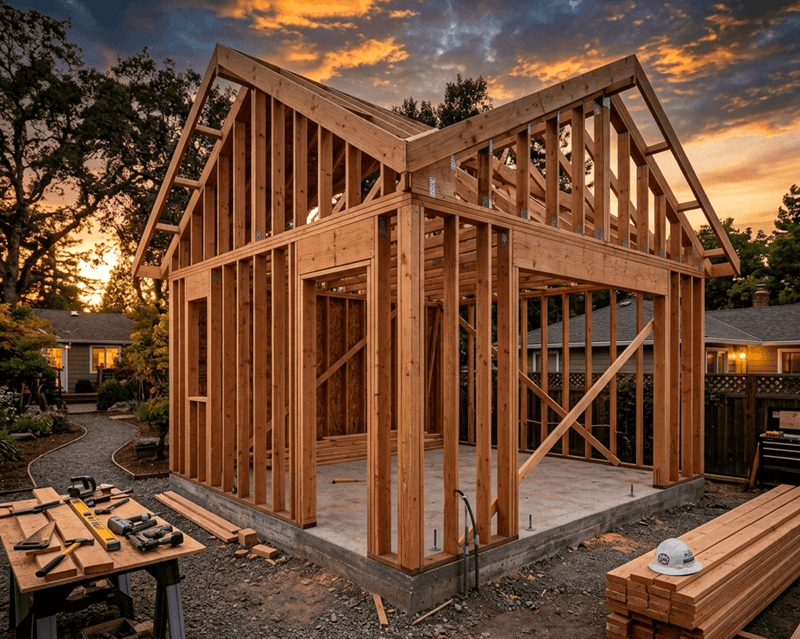
New Construction Platform Floor Systems

We frame complete wood platform floor systems for new home construction across Cameron Park and El Dorado Hills. Platform framing in which each floor level is framed as a complete platform before the walls above are raised is the standard method for residential construction in California. We frame the beam and post grid from the structural plans, set the floor joists at the engineered spacing and depth, install rim joists and blocking at all required locations, and prepare the platform for subfloor installation. We size every member to the structural engineer's specifications and the applicable California Residential Code joist span tables.
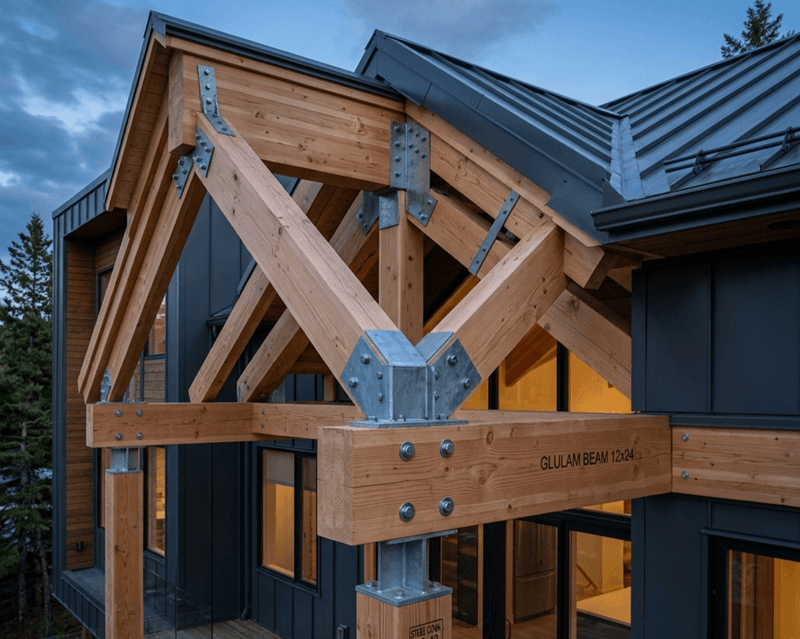
Crawl Space Floor Systems

A significant portion of Cameron Park's residential housing stock sits on raised foundations with crawl space floor systems, wood frames elevated above the ground, accessible from below for plumbing, mechanical, and structural maintenance. We frame new crawl space floor systems for additions and new construction, and we rebuild deteriorated crawl space floor systems where joists, rim joists, sill plates, or beams have been compromised by moisture, wood-destroying organisms, or settlement. Crawl space floor systems in Cameron Park require specific attention to vapor management details at the framing stage blocking configurations that allow proper ventilation, material selections appropriate for the ground-moisture environment, and connection hardware that resists the corrosion exposure present in enclosed crawl spaces.
Room Addition Floor System Tie-Ins

Connecting a new addition floor system to an existing home's floor structure requires precise matching of joist depth, direction, and bearing conditions. The new floor must land at the same finished floor elevation as the existing interior, which means working backward from the existing framed floor height to determine the beam depth, joist depth, and foundation height required for the new addition. A mismatch at this stage even a half-inch produces a visible step or hump at the threshold between existing and new space that cannot be corrected without reframing. We assess the existing floor system before the additional foundation is designed, so the tie-in elevation is solved at the planning stage, not the framing stage.
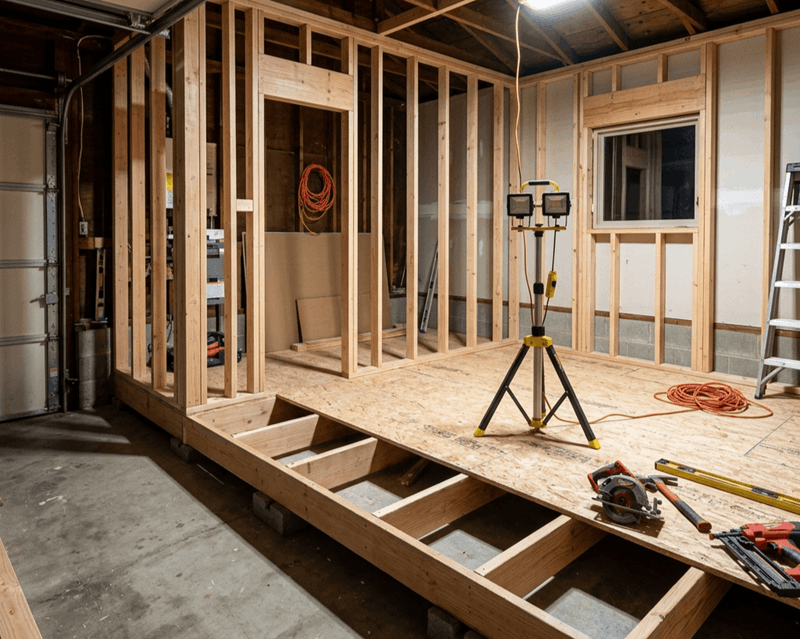
ADU Floor System Framing

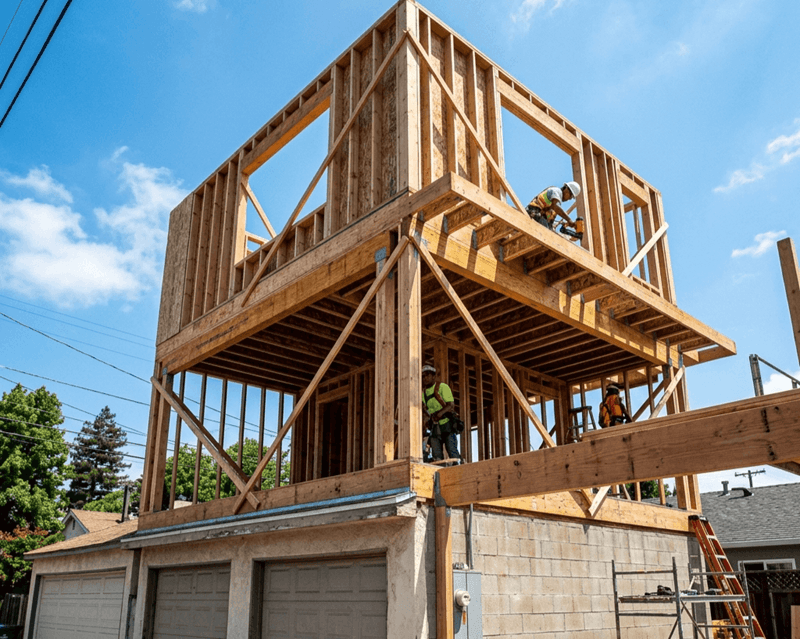
Detached ADUs in Cameron Park can be built on either a concrete slab foundation or a raised wood floor system, depending on the site conditions, the owner's preference, and the structural engineer's recommendation. When a raised wood floor system is specified for an ADU, we frame it to the permitted plans with full attention to the El Dorado County setback, height, and ventilation requirements that govern accessory structures. For attached ADUs converting existing garage space, we frame the new raised floor system over the existing concrete slab to bring the living space to the required finished floor elevation for habitable use.
Engineered Floor Joist Systems

When spans exceed what dimensional lumber can carry at code-compliant deflection limits or when mechanical ducts must run through the floor system without requiring notching, engineered floor joists are the correct structural solution. I-joists (engineered wood I-beam floor joists with OSB webs) provide exceptional depth-to-strength ratios and can span significantly farther than dimensional lumber at the same depth. Open-web floor trusses allow HVAC ducts and plumbing to run through the web of the truss without any structural compromise. We install both systems per the manufacturer's engineering, coordinate with the structural engineer on bearing and blocking requirements, and install all required squash blocks, rim board, and web stiffeners at every load-bearing point.
Floor System Corrections on Active Construction Projects

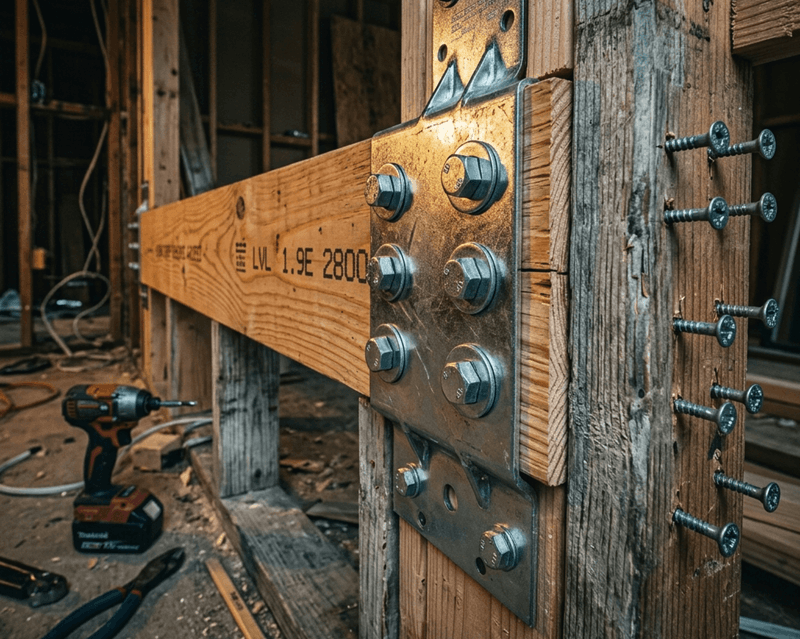
When an ongoing construction project reveals floor framing deficiencies undersized joists for the actual span, missing mid-span blocking, improperly notched members from plumbing rough-in, incorrect bearing at the beam, or point loads from above that are not picked up by the joist system we correct the defects to the structural plans and California Residential Code before the subfloor is installed. We document every correction with photographs and written scope for the permit record.

Why Cameron Park Homeowners Choose DC Custom for Floor System Framing

We Size Floor Systems to the Actual Loads Not Industry Averages

01

A floor system must be sized for the loads it will actually carry. A kitchen with stone countertops, heavy cabinetry, and a refrigerator imposes meaningfully different point loads than an empty bedroom. A mechanical room with a tankless water heater, water softener, and air handler imposes point loads that must be picked up by doubled joists and transferred to the beam below. We review the architectural and structural plans for load concentrations before finalizing joist sizing and blocking layouts not after the floor is framed and the mechanical rough-in reveals the problem.

Crawl Space Framing Experience in El Dorado County's Moisture Environment

02

Cameron Park’s crawl space floor systems operate in a ground-moisture environment that accelerates wood deterioration when ventilation and vapor management details are not built correctly at the framing stage. We are experienced with the crawl space framing details that matter for long-term floor system performance in the foothill environment correctly vented rim joist configurations, pressure-treated sill plate and rim joist materials where the moisture exposure warrants it, and connection hardware rated for the corrosion environment present in enclosed crawl spaces.

Precise Floor Elevation Matching for Addition Tie-Ins

03

The most common floor framing failure in room additions is an elevation mismatch at the connection between existing and new floor systems, a problem that is almost always caused by a contractor who did not assess the existing floor system before the new foundation was designed. We perform this assessment as part of our pre-construction plan review on every addition project, so the tie-in elevation is confirmed before concrete is poured, not after the floor is framed and the discrepancy becomes a reframing problem.

Engineered Joist System Expertise

04

I-joists and open-web floor trusses have specific installation requirements: squash blocks at bearing points, web stiffeners at concentrated loads, specific rim board products at the perimeter, and precise blocking configurations that differ from dimensional lumber requirements. A floor framed with engineered joists installed like dimensional lumber will squeak, deflect, and potentially fail in ways that are expensive to correct after the subfloor is down. We install engineered floor systems per manufacturer specifications and coordinate with the structural engineer on every non-standard condition.

Permit and Inspection Experience in El Dorado County

05

We pull every floor framing permit through El Dorado County Building Services, submit the required documentation, and meet the framing inspector at the correct construction stage before the subfloor is installed. We are familiar with what El Dorado County field inspectors check at the floor framing inspection, and we frame to those standards from the start rather than generating correction notices that delay the project.

Our Process

How Our Cameron Park Floor System Framing Projects Work

01

Structural Plan Review and Load Analysis

We review the architectural and structural framing plans before pricing the project. We identify the floor system type, joist species and grade, engineered product specifications, beam and post grid layout, bearing wall locations above, and any point loads from mechanical equipment or structural posts in the floors above. We flag every condition that requires blocking, doubled joists, or beam upgrades not shown on the plans before the permit is submitted.

02

Permit Application with El Dorado County

We prepare and submit the building permit application with the required plan set and structural calculations. For floor systems involving engineered lumber products, we include the manufacturer's engineering documentation with the permit submission. We track plan check status and respond to corrections before scheduling any on-site work.

03

Foundation Verification and Bearing Point Confirmation

Before framing begins, we verify that the foundation bearing elevations, anchor bolt locations, and sill plate installations are consistent with the framing plan. A foundation that is out of level or has anchor bolt locations that do not match the beam grid will produce a floor system that is difficult to correct after the joists are set. We catch and document these conditions before the first beam is placed.

04

Floor System Framing Execution

We set the beam and post grid from the structural plans, install the sill plates, set the rim joists, and hang the floor joists at the engineered spacing. We install all required blocking at mid-span, at bearing walls above, at mechanical point loads, and at shear transfer locations where the floor connects the shear wall system. For engineered joist systems, we install all squash blocks, web stiffeners, and rim board per manufacturer specifications.

05

Framing Inspection and Documentation

We schedule the El Dorado County floor framing inspection and meet the inspector on-site before the subfloor is installed. After the inspection passes, we provide you with the signed inspection card, permit record, and a complete photo documentation file of the completed floor system before the subfloor covers the structural assembly.

Floor System Framing in Cameron Park's Foothill Environment

The El Dorado County foothills present floor framing conditions that do not exist on Sacramento’s valley floor and that require specific knowledge to address correctly.

Crawl Space Environments and Moisture Management.

A large portion of Cameron Park's housing stock sits on raised foundations with crawl space floor systems. The crawl space environment in the foothills combines ground moisture from El Dorado County's seasonal rainfall, limited natural ventilation in enclosed crawl spaces, and consistent termite pressure from the region's high subterranean termite activity zone. Floor systems in this environment require pressure-treated sill plates and rim joists at the foundation interface, correct vent opening sizing and placement for cross-ventilation, and connection hardware selected for the corrosion exposure present in ground-contact adjacent environments. These details must be built into the floor system at the framing stage — they cannot be retrofitted after the floor system is enclosed.

Expansive Soils and Foundation Movement.

El Dorado County's expansive clay soils expand when wet and shrink when dry, creating seasonal foundation movement that puts recurring stress on the connection between the concrete foundation and the wood floor system above. Sill plate anchor bolt connections, post base hardware, and the perimeter rim joist-to-foundation connection must be installed to resist the uplift and lateral forces that result from this seasonal movement. A floor system with undersized or incorrectly installed anchor hardware will gradually loosen at the foundation connection over time producing squeaks, drafts, and progressive structural loosening that is expensive to correct after the floor is finished.

START YOUR PROJECT?

Ready to Build a Floor System That Performs for Decades?

Whether you are building a new home with a crawl space floor system on a sloped foothill lot, framing an addition floor that must tie in precisely to your existing interior elevation, or installing an engineered joist system for a wide-open great room span DC Custom Framing brings structural precision, El Dorado County permit expertise, and foothill-specific floor framing knowledge to your project.

Questions & Answers

Frequently Asked Questions

Does floor system framing require a permit in El Dorado County?
Yes. All new floor system framing and significant floor framing modifications in Cameron Park require a building permit through El Dorado County Building Services. The framing must be inspected before the subfloor is installed. DC Custom handles all permit applications, plan submissions, and inspection scheduling.
Dimensional lumber floor joists typically 2×8, 2×10, or 2×12 are cut from solid wood and graded for structural use. Engineered I-joists are manufactured wood products with a structural lumber flange on the top and bottom and an oriented strand board web in the middle. I-joists can span farther than dimensional lumber of the same depth, are more dimensionally stable (less prone to shrinking, cupping, or twisting), and can be manufactured in deeper profiles than dimensional lumber allows. They also have factory-punched knockouts in the web that allow small mechanical lines to pass through without structural compromise, a significant advantage in residential floor systems where plumbing and electrical must cross joist bays.
We assess the existing floor system measuring the finished floor elevation, the subfloor thickness, the joist depth, the beam depth, and the foundation bearing height before the new addition foundation is designed. Working backward from these existing dimensions, we determine the foundation height, beam depth, and joist depth required for the new addition floor to land at the correct elevation. We communicate these requirements to the foundation contractor and the architect before concrete is poured, so the tie-in elevation is confirmed by design rather than corrected by reframing.
A bouncy or springy floor is almost always a structural framing problem, not a flooring problem. The most common causes are joists that are undersized for their span, joists that have been improperly notched or bored for plumbing or electrical runs, missing mid-span blocking that allows joists to twist under load, a beam that has deflected at mid-span due to undersizing or post settlement, or a crawl space post that has shortened due to crushing or decay. DC Custom assesses the structural cause before recommending any repair; a bouncy floor that is covered with new flooring without correcting the framing deficiency will remain bouncy.
Yes. When converting a garage to livable space, a raised wood floor system framed over the existing concrete slab is one method for bringing the floor to the correct elevation and providing a structurally appropriate base for finished flooring. We frame sleepers or a full joist system over the slab depending on the required height gain and the finished flooring requirements specified in the plans. The system must be designed to manage moisture between the concrete and the wood framing a detail we build into the floor system design from the start.
A floor system for a single-room addition typically takes 1–3 days of on-site framing time, depending on the system type, the crawl space access conditions, and the complexity of the beam and post grid. A complete new home floor system on a crawl space foundation typically takes 3–6 days. Permit and plan check timelines through El Dorado County currently add 3–8 weeks before on-site work begins, depending on project type and current department workload.
Scroll to Top