
Home » Addition Framing

Room Addition Framing Contractor in Cameron Park, CA

Structurally precise framing for room additions, second-story expansions, bump-outs, and master suite extensions tied cleanly into your existing Cameron Park home.

DC Custom Framing specializes in the structural tie-in framing that makes room additions perform like they were always part of the original house. We assess the existing structure before the addition is designed, frame the new structure to the approved structural plans, and execute the tie-in details at the floor, wall, and roof connections with the precision that the framing inspector and the next fifty years of weather, settlement, and occupant load will test.

What Is Addition Framing

Why Is It the Most Demanding Type of Residential Framing

Addition framing is the structural framing scope of a room addition to a new section of building attached to an existing home. The scope includes the floor system, wall system, and roof system of the new space, plus every structural connection between the new framing and the existing building.
The floor tie-in is the first critical connection. The new addition floor must arrive at the same finished floor elevation as the existing interior which requires precise measurement of the existing floor assembly (finished floor, subfloor, joists, beams, foundation) and backward calculation of the new foundation height to produce a matching elevation. A mismatch of even a half-inch produces a visible step or hump at the threshold that cannot be corrected after framing without repouring the foundation or reframing the floor.
The wall tie-in is the second critical connection. The new addition walls must connect to the existing exterior wall at the junction point which means removing the existing siding, sheathing, and possibly the rim joist to expose the framing behind it. The condition of the existing framing at the connection point determines what kind of tie-in is possible. Deteriorated studs, rotted rim joists, or improperly notched framing members at the existing wall must be repaired before the new wall can be structurally connected.
The roof tie-in is the third and most technically demanding connection. The new addition roof must integrate with the existing roof in a way that drains water correctly, maintains structural continuity at the ridge or hip intersection, and does not create a valley that concentrates water at the junction between old and new. Roof tie-in framing requires precise matching of roof pitch, careful valley rafter or cricket installation, and flashing coordination that begins at the framing stage.

Addition Framing Services We Provide in Cameron Park
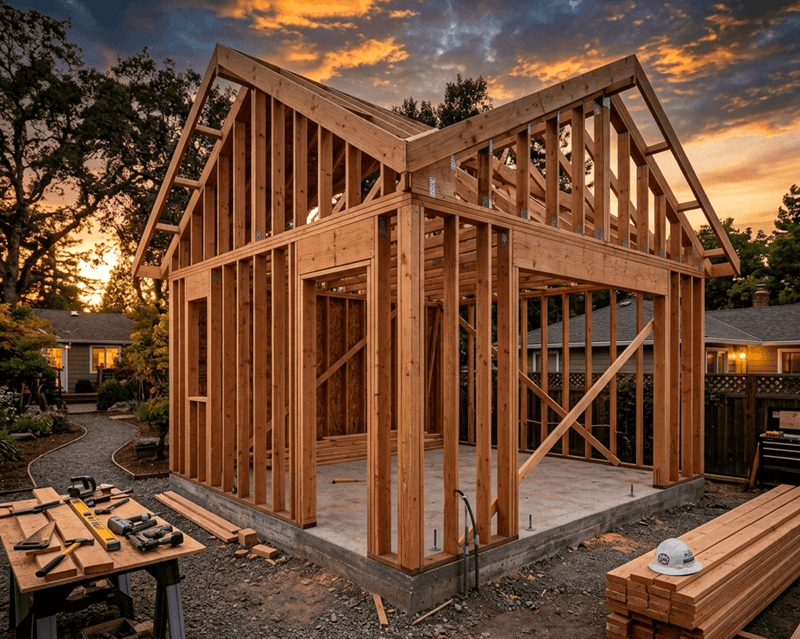
Single-Story Room Additions

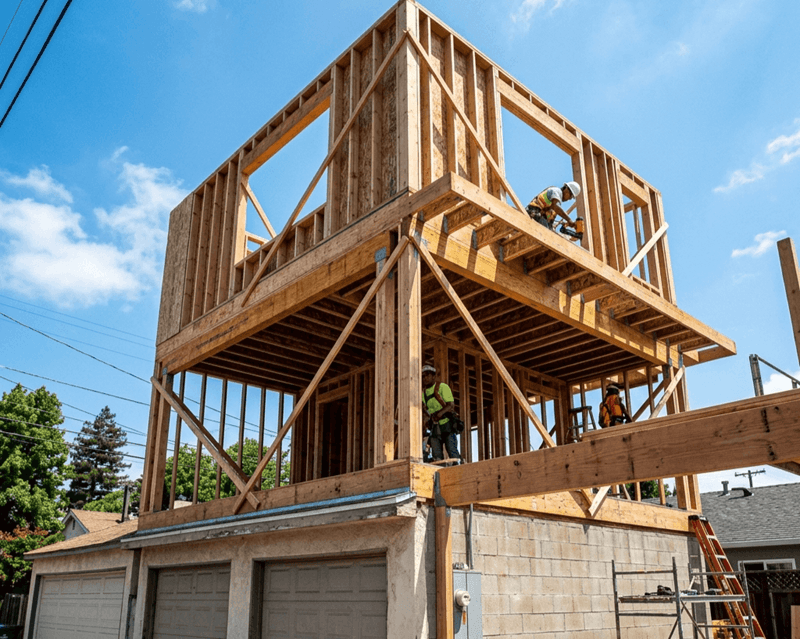
A single-story room addition extends the footprint of your home at the ground level adding a bedroom, family room, home office, or expanded living area. We frame the complete addition shell: floor system tied to the existing floor elevation, bearing walls and shear walls per the structural plans, partition walls for interior layout, and roof framing integrated with the existing roof geometry. We execute the tie-in at all three connection points floor, wall, and roof with the precision required to produce a seamless transition between existing and new.
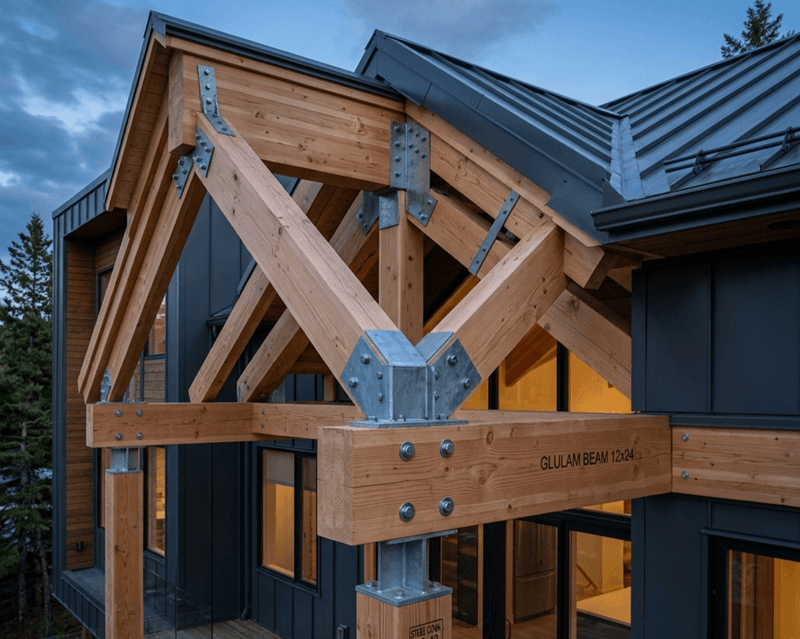
Second-Story Additions

Adding a second story to a single-story Cameron Park home is a major structural undertaking that requires assessment of the entire existing first-floor structure. The existing first-floor walls must be verified as adequate to carry the new load from above and upgraded where they are not. The existing foundation must be evaluated for the additional weight. New second-floor joists, bearing walls, shear walls, and roof framing must be sized and connected to carry every load path cleanly from the new roof to the existing foundation. We perform or coordinate the structural engineering assessment, execute the framing under the approved permit, and manage the temporary roof removal and weather protection sequence during construction.
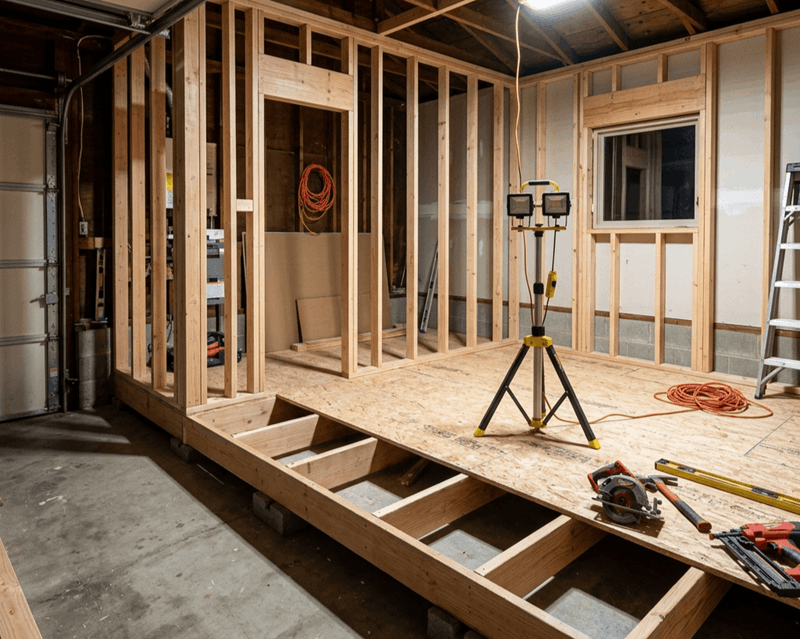
Kitchen and Great Room Bump-Outs

A bump-out extends an existing room, typically a kitchen, dining room, or living room by three to eight feet to create additional usable space without the cost and complexity of a full room addition. The framing scope of a bump-out is smaller than a full addition, but the structural tie-in is proportionally more complex because the existing roof, floor, and walls must be opened, extended, and reframed within a tight footprint. We frame bump-outs with the same structural rigor as full additions, proper headers at the new opening, floor system extension matched to the existing joist elevation, and roof framing that integrates with the existing roofline without creating drainage problems.
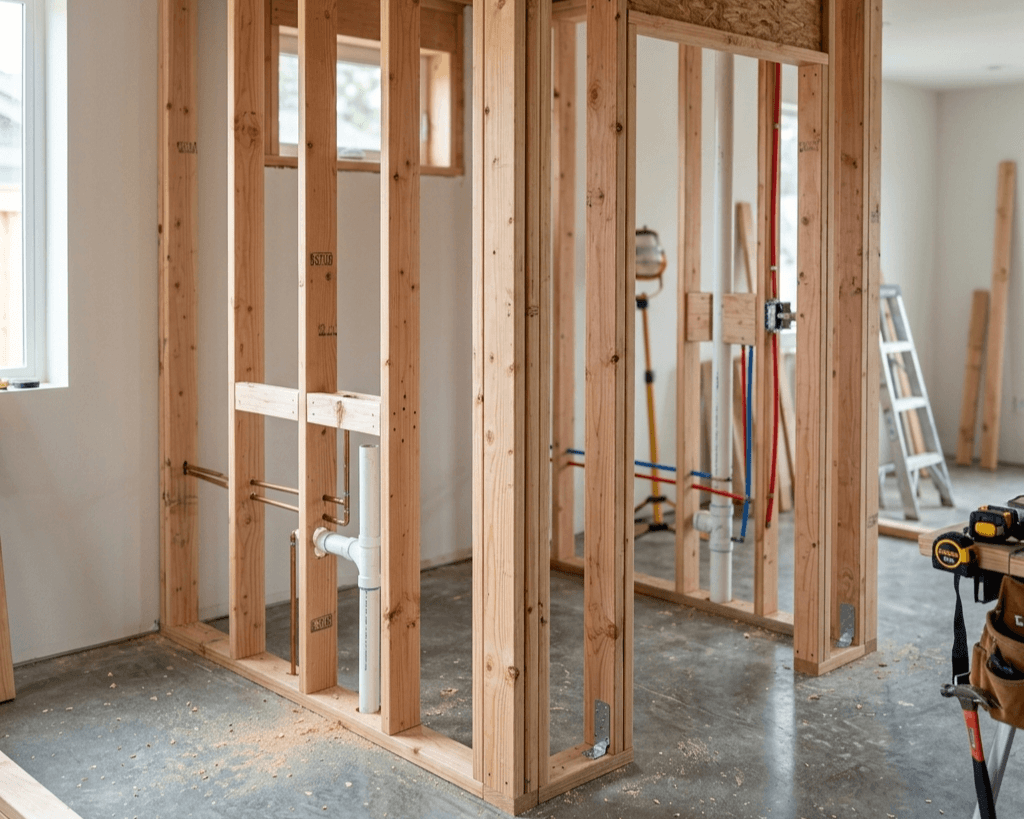
Master Suite Additions

A master suite addition combines bedroom space, bathroom space, and often a walk-in closet into a single addition that extends from an existing bedroom or hallway. The framing scope includes bearing walls and partitions for room layout, headers for closet and bathroom doorways, floor system framing sized for the point loads from fixtures (bathtub, shower, toilet, vanity) and the water weight they contain, ceiling framing that accommodates exhaust ducting, and roof framing that ties into the existing roof at the correct pitch and drainage plane. We coordinate the framing plan with the plumber and HVAC contractor to ensure that joist spacing, blocking, and ceiling depth accommodate the mechanical systems before the structure is closed in.
Sunroom and Enclosed Patio Additions

Converting an existing open patio or deck into an enclosed sunroom or all-season room requires framing that is structurally independent of the existing patio structure because patio framing is not designed to carry the loads of a habitable room. We frame sunroom additions with a new foundation, a new floor system, bearing walls sized for the roof and window loads, and a roof structure that ties into the existing house at the wall-to-roof connection. The extensive window and glass door openings typical of sunroom designs require carefully sized headers and king/jack stud assemblies to carry the roof load across wide spans without visual deflection.
Addition Framing Corrections and Structural Upgrades

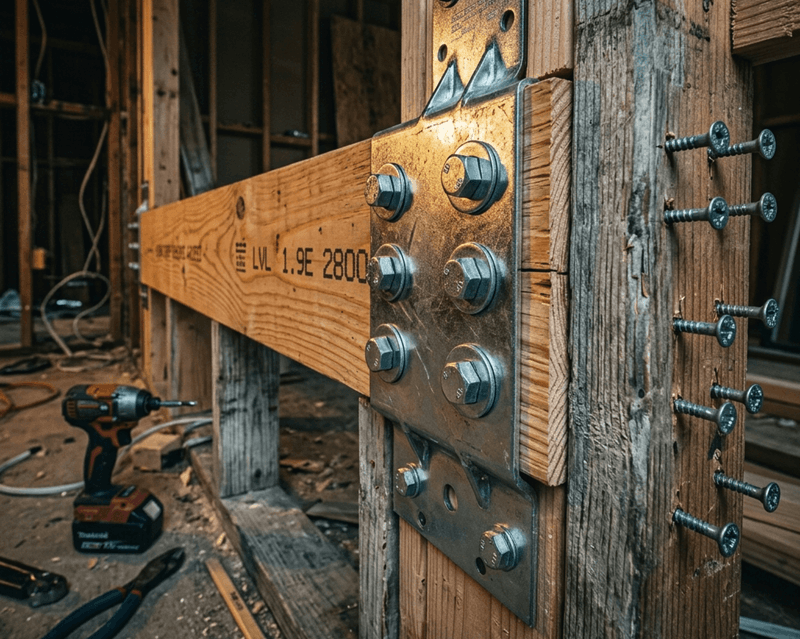
When an additional project, whether new or from a previous owner's work, reveals framing deficiencies at the tie-in point, we correct them. Common findings include: existing rim joists that are rotted at the connection point, existing headers that are undersized for the modified load path, roof tie-ins that create valleys without proper valley rafter support, and shear wall requirements that were not addressed when the original addition was built. We document every correction and submit the scope to the building department for permit and inspection.

Why Cameron Park Homeowners Choose DC Custom for Addition Framing

We Assess the Existing Structure Before the Addition Is Designed

01

The most expensive mistakes in addition framing happen when the contractor does not assess the existing building before the new addition plans are drawn. A floor elevation that does not match. A bearing wall connection that cannot be made because the existing framing is deteriorated. A roof tie-in angle that was calculated from the plans but does not match the actual roof pitch on the building. We perform a pre-design structural assessment of your existing home measuring floor elevations, inspecting existing framing at the proposed connection points, and identifying any conditions that the addition design must account for. This assessment happens before the architect finalizes the plans, not after the foundation is poured.

Floor Elevation Matching Is Solved Before Concrete Is Poured

02

The single most common addition framing failure is a floor elevation mismatch at the threshold between existing and new. We measure the existing floor assembly completely finished floor height, subfloor thickness, joist depth, beam depth, and foundation bearing elevation and work backward to calculate the exact foundation height required for the new addition to match. We communicate these dimensions to the foundation contractor before any concrete is placed. The floor elevation is solved by design, not corrected by shimming after the framing is up.

Roof Tie-In Framing That Drains, Aligns, and Carries Load

03

The roof tie-in is where most additional framing contractors create long-term problems: valleys that concentrate water at the junction, ridge connections that do not align in height, and hip or valley rafter intersections that are not structurally supported. We lay out every roof tie-in from the existing roof geometry measuring the actual pitch, verifying the ridge height at the connection point, and calculating the new roof geometry to match. We frame valley rafters, crickets, and flashing kickout details at the framing stage so the roofing contractor has a clean, structurally sound substrate to waterproof.

Structural Tie-In to Older Cameron Park Homes

04

Many Cameron Park homes were built in eras when framing practices, lumber dimensions, and connection hardware differed significantly from current code. Tying a code-compliant new addition into an older existing structure requires understanding what is behind the existing siding, the stud size, the sheathing type, the condition of the rim joist, and whether the existing wall is balloon-framed or platform-framed. We open the existing wall at the connection point during the pre-construction phase and assess the actual framing conditions before we commit the additional framing plan.

Every Addition We Frame Is Permitted, Inspected, and Documented

05

We pull the addition framing permit through El Dorado County Building Services, schedule the framing inspection at the correct construction stage, and meet the inspector on-site. After the inspection passes, you receive the signed inspection card, permit record, and a complete photo documentation file of the addition framing including every tie-in connection before insulation and drywall cover the work.

Our Process

How Our Cameron Park Addition Framing Projects Work

01

Existing Structure Assessment

Before the addition plans are finalized, we assess the existing home at every proposed connection point. We measure existing floor elevations, inspect the existing framing through the crawl space or attic, verify the existing roof pitch and ridge height, and identify any conditions deteriorated framing, undersized members, previous unpermitted modifications that the addition design must accommodate. We provide this information to your architect or designer so the plans reflect the actual existing conditions, not assumptions.

02

Addition Plan Review and Structural Coordination

After the plans are drawn, we review the architectural and structural addition plans completely. We identify every bearing wall, shear wall, header, and hold-down location. We verify the floor elevation calculation against our existing-condition measurements. We confirm that the roof tie-in geometry matches the actual existing roof. We flag any discrepancy between the plans and the existing conditions before the permit is submitted.

03

Permit Application with El Dorado County

We prepare and submit the addition building permit application to El Dorado County Building Services with the required plan set, structural calculations, energy compliance documentation, and WUI compliance details where applicable. We track plan check status and respond to corrections. We coordinate with the structural engineer on any plan check revisions.

04

Addition Framing Execution

We open the existing wall, floor, and roof at the connection points. We repair or upgrade any deteriorated existing framing at the tie-in locations. We frame the new addition in sequence: floor platform matched to the existing elevation, bearing walls and shear walls per the structural plans, interior partitions, and roof framing with the tie-in to the existing roof geometry. We install all Simpson Strong-Tie connection hardware, shear wall nailing, and hold-down hardware per the structural engineer's specifications. For WUI projects, we frame the addition's exterior wall, eave, and soffit assemblies to the required fire-hardening details.

05

Framing Inspection and Documentation

We schedule and attend the El Dorado County framing inspection. The inspector will check every structural connection, the floor tie-in, the wall tie-in, the roof tie-in, shear wall nailing, hold-down installation, and WUI assembly details. After the inspection passes, you receive the complete project documentation before insulation and drywall close in the structure.

START YOUR PROJECT?

Ready to Add Space to Your Cameron Park Home the Right Way?

Whether you are adding a bedroom, expanding your kitchen, building a master suite, or going vertical with a second-story addition, DC Custom Framing brings structural precision, existing-structure assessment expertise, and El Dorado County permit experience to every addition project.

Questions & Answers

Frequently Asked Questions

Does a room addition require a building permit in Cameron Park?
Yes. All room additions in Cameron Park require a building permit through El Dorado County Building Services. The addition must receive a framing inspection before insulation and drywall are installed. The permit scope typically includes structural framing, electrical, plumbing, mechanical, insulation, and final inspections. DC Custom handles the framing permit application and all framing-related inspection scheduling.
We measure the existing floor assembly, finished floor surface, subfloor, joists, beams, and foundation bearing elevation before the additional foundation is designed. Working backward from the existing dimensions, we calculate the exact foundation height, beam depth, and joist depth required for the new addition floor to land at the same finished elevation. We communicate these dimensions to the foundation contractor before concrete is poured. The elevation match is solved by measurement and calculation before framing begins, not by shimming or grinding after the fact.
Yes. but only if the roof tie-in is framed and flashed correctly. The most common leak point on a room addition is the valley or junction where the new roof meets the existing roof. We frame the roof tie-in with properly supported valley rafters, install cricket framing where the roof meets a perpendicular wall, and coordinate flashing kickout details at the framing stage so the roofing contractor has a structurally sound and drainage-correct substrate to waterproof. We do not leave roof tie-in geometry to the roofer; we solve it at the framing stage.
Most room additions that involve new bearing walls, modifications to existing bearing walls, wide-span headers, second-floor additions, or shear wall requirements will require stamped structural drawings from a licensed structural engineer. Simple single-story additions with conventional framing and no bearing wall modifications may be designed using prescriptive code tables. We assess your project scope and advise on whether structural engineering is required during the plan review stage.
We assess the existing framing at every proposed connection point during the pre-construction structural assessment. If we find deteriorated rim joists, rotted studs, undersized headers, or previous unpermitted modifications, we document the condition and include the repair scope in the addition framing plan. The existing framing at the connection point must be structurally sound before the new addition can be attached otherwise the tie-in connection will fail over time.
A single-story room addition framing package including floor, walls, roof, and all tie-in connections typically takes 5–10 days of on-site crew time depending on scope and complexity. A second-story addition typically takes 10–20 days because the existing roof must be removed and the temporary weather protection managed during construction. Permit and plan check timelines through El Dorado County currently add 4–10 weeks before on-site work begins.
Scroll to Top